

Composite Bonding Cost: Why the Right Order Matters
When people ask me about composite bonding cost, they usually mean the price of the bonding itself. But the thing that most affects what you spend over time is not the fee for a single treatment — it is the order you do things in. Get the sequence wrong and you pay more, twice: once because it looks bulkier than it should, and again because it does not last.
I am a general dentist with a special interest in aesthetics, and a lot of my work combines treatments — Invisalign first, then whitening, then bonding. Here is why that order matters, and why skipping ahead is usually a false economy.
Bonding crooked teeth means faking a position with bulk
Composite is a wonderful finishing material. It is not a good tool for pretending a tooth is somewhere it is not.
If your teeth are quite misaligned and we try to correct the look with composite alone, we end up adding a lot of material to compensate.
“Sometimes if your teeth are quite misaligned, you’re gonna end up plastering the teeth with composite to try and compensate for the misalignment.”
There is a world of difference between adding a touch to an uneven edge and building up a whole surface to disguise a position. The second one means volume — and volume in the wrong place is exactly what makes bonding look artificial.
“When people have misaligned teeth, it means you have to add a lot to the surface of the teeth, and sometimes in a way that adds more volume than perhaps would aesthetically be ideal.”
Align first, and composite becomes a fine finishing instrument
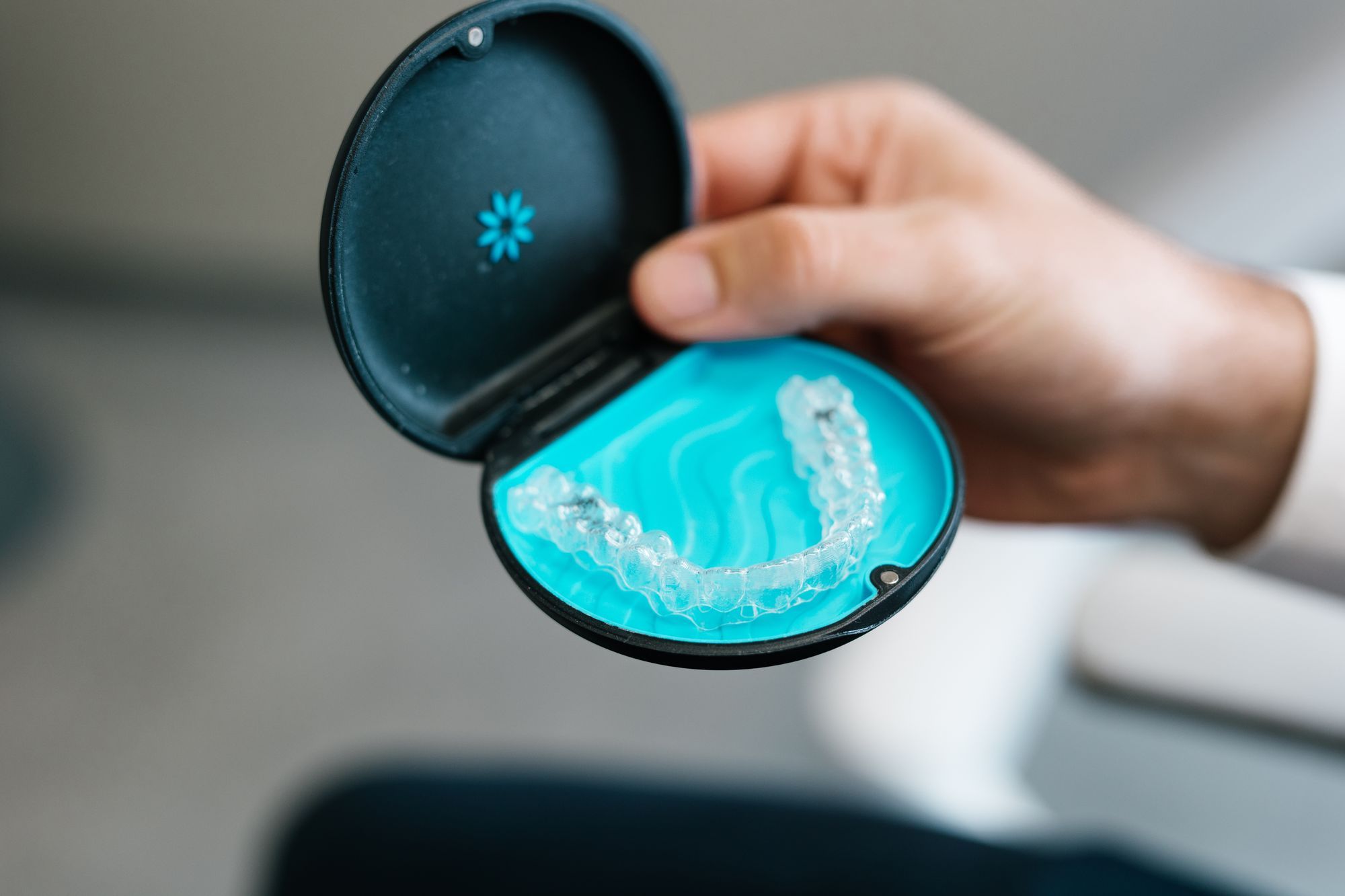
Now flip it around. If we move your natural teeth into the right position first — usually with Invisalign, which I find the most adult-friendly approach because it is more discreet — then the composite has almost nothing to compensate for.
“If you can get your teeth, your natural teeth, to the right place, and then you have to do very little composite to then finesse it.”
That is the whole philosophy in one line. Composite should be a scalpel, not a filler.
“Composite should truly be used as a tool just to kind of finesse the shape.”
And this is where the cost argument comes back in. Less composite means less material to chip, less to stain, and less to replace when the time comes.
“The consistent replacing of the composite, risks of chipping, etc. becomes minimized quite significantly, because your own teeth are in the right place.”
So aligning first is not an added expense on top of the bonding. It is often what protects your investment in the bonding.
Whiten before you bond — because you can’t lighten composite later
The next step in the sequence trips a lot of people up, because it runs against intuition. People assume composite can be any colour they like, including brilliant white. It cannot — not without looking wrong.
“Some people think, oh, I want really white teeth, I’m gonna just plaster all my teeth with composite to get them a different colour. But the reality is good composite is translucent.”
Because composite is translucent, it takes on the shade of the tooth underneath. If that tooth is dark and you want a lighter result, the only way to block the colour is to make the composite thick.
“To get it to the right colour, the composite ends up being quite thick. And that’s where it starts to look quite bulky and unnatural.”
There is also a one-way-street problem: whitening lightens natural tooth, but it does not lighten composite. So if you bond first and whiten afterwards, your natural teeth lift in shade and your bonding stays put — leaving a mismatch. That is why whitening (dentist-led, done properly) comes before the bonding, so we match the composite to your final, lighter shade. Do it the other way round and you are often paying to redo work you have only just had done.
The rule underneath all of it: health first
There is a principle sitting beneath this whole sequence, and it is the one I feel most strongly about.
“If something isn’t healthy, it doesn’t actually look good.”
Decay does not look good. Inflamed gums do not look good. Worn teeth and receding gums do not look good. So before any cosmetic work, the underlying health has to be sorted — not as an upsell, but because it is what makes the aesthetics hold up.
“The reality in dentistry, as much as there’s a lot of marketing out there that will tell you otherwise — you can’t shortcut this part.”
And there is a plain financial logic to it too. Dental work is not cheap — I am not going to pretend otherwise — so when you have cosmetic treatment, you are investing in an outcome.
“If you invest in something but the foundation isn’t good, so the dental health isn’t good, the results are not going to be as good, and they’re not going to last as long.”
Cosmetic work built on an unhealthy mouth is money spent on something that will not last. That is the most expensive bonding of all.
The chip that keeps failing is the clearest example
Nothing illustrates this better than the repair that will not hold.
“A lot of people come in and say, yeah, I’ve always had this chip on my tooth, and the dentist fixed it, like, 5 or 6 times, it always breaks again. It’s breaking again because there’s an issue with their bite, that nobody addressed.”
Fix the chip six times and you have paid six times. Address the bite first — sometimes with Invisalign — and the repair finally has a chance to last. That is the order argument in miniature: deal with the cause, then finesse the surface.
What this means for your budget
So when you are working out composite bonding cost, do not price the bonding in isolation. Ask instead: is my mouth healthy, are my teeth roughly in the right place, and is my colour where I want it before the composite goes on? If the answer is yes, the bonding is minimal, natural and durable. If not, front-loading the alignment, health and whitening is what keeps you from paying for the same result twice.
I cannot tell you which of these you need without looking — every mouth is different, and the sequence is tailored each time. That is what a consultation is for.
FAQs
Should I whiten before or after composite bonding?
Before. Composite is translucent and cannot be lightened once it is placed, so we whiten the natural teeth first (dentist-led) and then match the bonding to your final shade. Bonding first usually leaves a colour mismatch.
Why do you recommend Invisalign before bonding?
Aligning your natural teeth first means the composite only has to finesse the shape, rather than add bulk to fake a straighter position. That keeps the result looking natural and reduces how much composite there is to chip, stain or replace.
Does the right order really lower my long-term cost?
It can. Doing things in sequence means less composite, more natural-looking results and fewer repeat repairs — especially where a bite problem would otherwise keep breaking the bonding. There are no guarantees, but the wrong order tends to cost more over time.
What is edge bonding?
Edge bonding is a smaller treatment that adds composite to the biting edges of the front teeth to even them out. It is a good example of composite used as a finishing tool — light-touch, shape-focused work on teeth that are already healthy and reasonably aligned.