
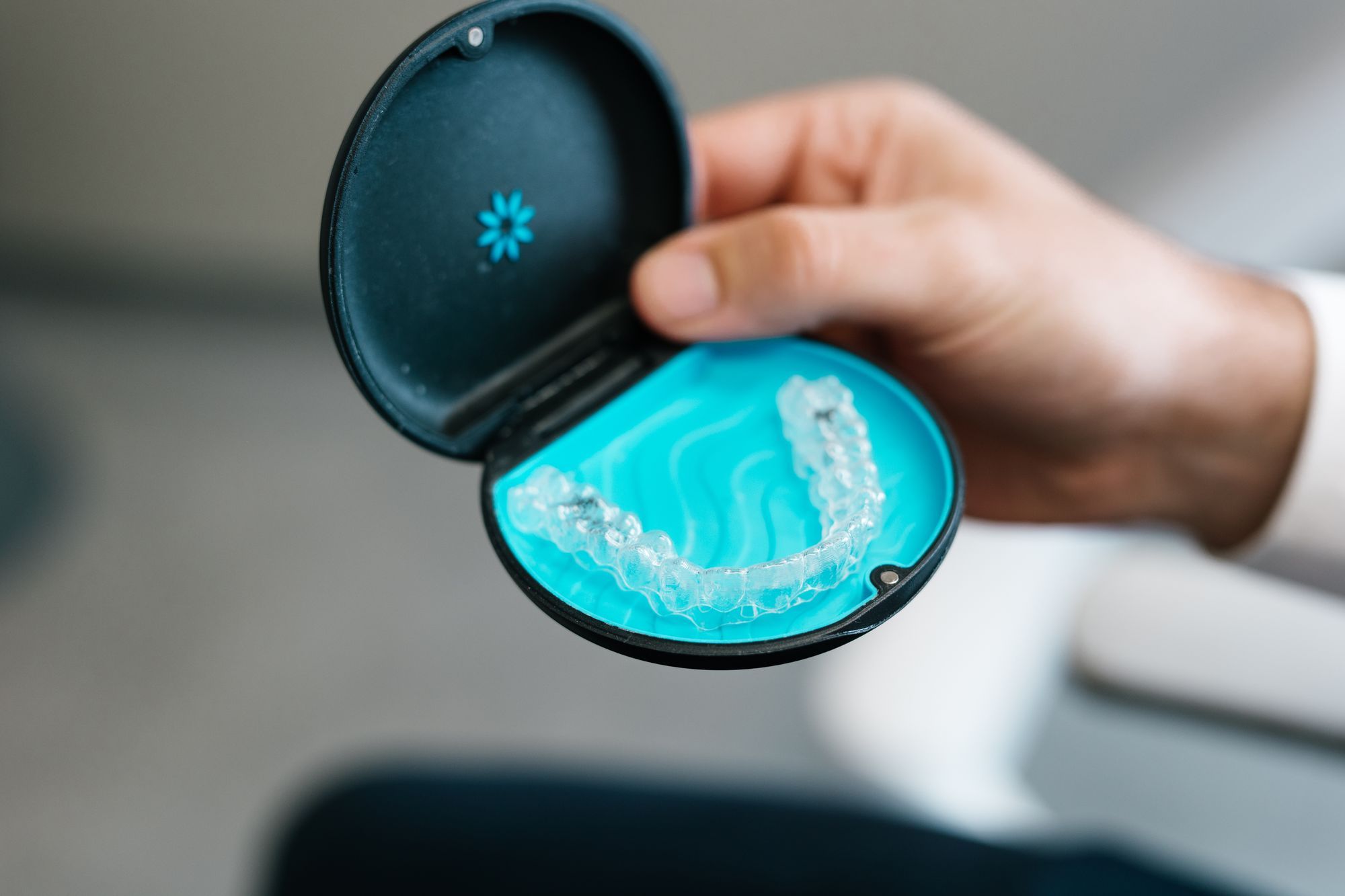

Interdental Brushes vs Floss: Why Brushing Isn’t Enough
Here is the thing I most want patients to understand about brushing: even done beautifully, twice a day, for two minutes, it only reaches part of each tooth. When you compare interdental brushes vs floss — or wonder whether either is really worth the bother — the honest starting point is that a toothbrush simply cannot get between your teeth. Skip that step and you are leaving plaque behind, guaranteed.
Let me explain the maths, because once you can picture it, the rest of your routine makes sense.
The maths of a single tooth
Think about one tooth for a moment. It has a biting surface on top, a front and a back, and two sides where it meets its neighbours. That is five surfaces. Your toothbrush does a lovely job on the top, the front and the back — but the bristles cannot reach the two sides tucked up against the next tooth.
“Immediately, if you’re not flossing or using brushes or something between your teeth, you’ve only cleaned around 60% of the surfaces.”
So without interdental cleaning you are leaving roughly a third of every tooth untouched — and it is the same one-third every single day. That is not a small oversight. It is a standing invitation for plaque.
What happens on the surfaces you miss
Plaque is not just “film” — it is bacteria. When it is allowed to sit undisturbed between your teeth, two things follow. First, the gum next to it becomes inflamed, which is why those in-between spaces are exactly where bleeding and puffiness tend to start. Second, soft plaque hardens into tartar.
“Once those deposits go hard, you can’t get them off yourself. You do need to then see a dental professional to get those removed.”
That is the whole argument for cleaning between your teeth daily. Get to the plaque while it is still soft and you are in control of it. Leave it, and the job moves out of your hands and into the hygienist’s.
Floss, interdental brushes and water flossers
So what should you actually use? Here is how I talk it through in the chair.
Floss
Floss is the classic for a reason — it hugs the tooth and cleans right down where the gum meets it. If you find ordinary floss fiddly, floss picks or floss sticks on a little handle do the same job, and there is no shame in using them.
“If that works, fantastic. Whatever works.”
Interdental brushes
For many people, interdental brushes are the most effective option of all — and they come sized for different gaps.
“You think of a brush being pushed into a space, it’s wiping the sides of both teeth, nicely.”
That wiping action is what makes them so good. A hygienist can size them for you so you are not guessing.
Water flossers — my honest view
Water flossers come up constantly, usually off the back of social media, so let me be clear that what follows is my clinical opinion rather than settled science.
I am not a massive fan of them for most mouths, and here is my reasoning. When you use floss, you have to ease and thread it into the gap — which tells you just how tight that space really is.
“How people are managing to direct a jet of water into that little space, you know, right at the back… For most of us, you hopefully don’t have those large spaces. I feel like you’re probably not getting that jet where it needs to go.”
Where I do think they earn their place is for people who have had gum disease and now have larger spaces between the teeth — a jet of water can get into those far more easily. And my overall caveat stands:
“Something’s better than nothing, to be honest.”
If a water flosser is the thing you will actually use every day, it is far better than skipping interdental cleaning altogether.
What I’d actually recommend
- A good-quality electric toothbrush with a soft head, twice a day for two minutes — and never skip the one last thing at night.
- Clean between your teeth every day. Interdental brushes (correctly sized) or floss both work well; pick the one you will genuinely keep up.
- Aim for daily. Every second day is the absolute minimum, because soft plaque hardens fast.
“It’s finding something that works for you, and sticking with it, and trying to do it as much as you can.”
That last line matters more than which product wins on paper. The best interdental tool is the one that is still in your bathroom cupboard, being used, in three months’ time.
Frequently asked questions
Are interdental brushes better than floss?
Both clean the surfaces a toothbrush misses. Interdental brushes suit many people because the bristles wipe both tooth surfaces at once, and they come sized for different gaps. Floss reaches tighter spaces and right along the gum line. The best choice is the one you will use consistently — ask your hygienist to help you size and test both.
How do I floss properly?
Ease the floss gently between the teeth, curve it into a C-shape against one tooth and slide it down to just below the gum, then repeat against the neighbouring tooth. Use a fresh section for each gap. If ordinary floss is fiddly, floss picks or sticks do the same job.
What is the difference between plaque and tartar?
Plaque is soft, sticky bacteria you can remove yourself with brushing and interdental cleaning. Left alone, it hardens into tartar, which is firmly attached and can only be removed by a dental professional.
Do water flossers replace floss?
In Cath’s clinical opinion they suit people with larger gaps — for example after gum disease — more than tight, healthy spaces, where a jet may not reach where it is needed. Something is better than nothing, but for most mouths she would still reach for floss or interdental brushes.
Not sure what to use between your teeth? Book a hygiene appointment at Smile Hub and we will size the right tools to your mouth and show you exactly how to use them.
Related treatments at Smile Hub: oral health screening, a new patient exam.