
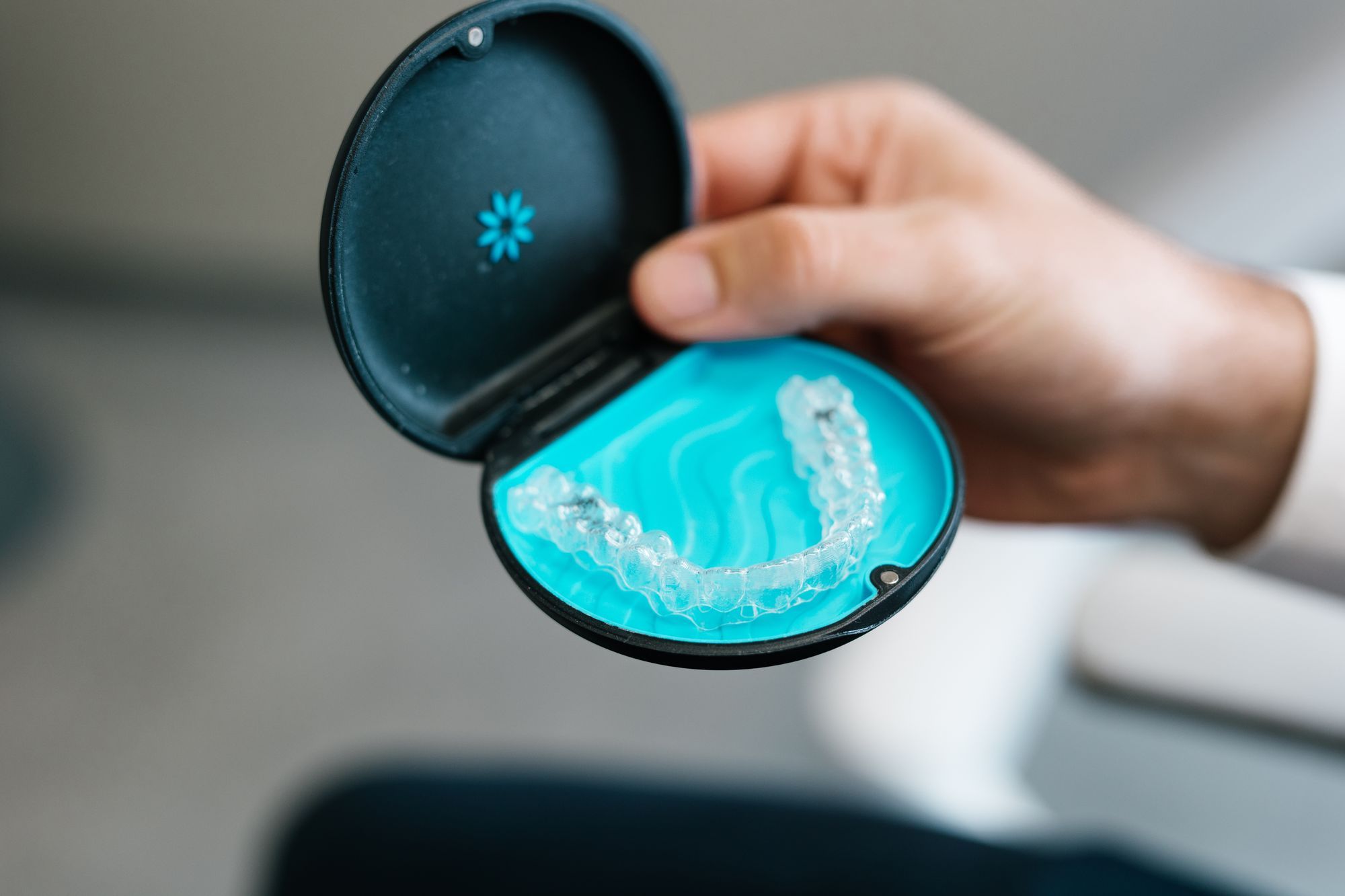

Invisalign London: Straight Is the Easy Part
If you’re weighing up Invisalign in London, you’ve probably been thinking about the goal in one word: straight. That’s the picture in everyone’s head — teeth that line up nicely in the mirror.
I want to gently reframe that for you, because after a lot of postgraduate training in clear aligners, here’s what I’ve come to believe:
“Getting the teeth straight is the really easy part of Invisalign. It’s making sure that those straight results last — so there’s stability — but also that the teeth are meeting in a very healthy way.”
Straight is the start. Stable, healthy and lasting is the actual job. Let me explain what that means, and why it’s what you should be asking your clinician about.
Why “the teeth look straight” isn’t the finish line
It’s entirely possible to move teeth into a line that photographs beautifully and still have an unfinished result. That’s because a smile isn’t just a front-on picture — it’s a working mechanism. Your teeth have to meet each other, dozens of times a day, for the rest of your life.
If they look aligned but meet badly, you haven’t solved the problem — you’ve repositioned it. So when I plan a case, aligning the teeth is only half of what I’m doing. The other half is making sure that when everything settles into place, the teeth come together in a way that’s healthy and built to last. That’s where the extra training and the more careful planning earn their keep.
The bite: how your teeth meet, and why it matters over ten years
“Bite” simply means how your upper and lower teeth come together. Get it right and the forces of everyday chewing are shared sensibly across your teeth. Get it wrong and those forces concentrate where they shouldn’t.
Over a decade, a poor bite can quietly take its toll:
- Wear — teeth grinding against each other in the wrong way gradually flatten and shorten.
- Chipping — concentrated force on the wrong edges leads to little fractures that keep recurring.
- Recession and strain — persistent overload isn’t kind to teeth or the gums and structures supporting them.
None of that is dramatic on day one. It’s slow. Which is exactly why it’s so easy to overlook when a case is planned only for how it looks. A well-finished Invisalign result isn’t just straight — it’s arranged so your teeth meet comfortably and share the load, protecting them for the long run.
Stability and relapse: why retainers aren’t an upsell
Here’s the part patients are sometimes surprised by. Teeth have a memory. Left to their own devices after treatment, they’ll tend to drift back towards where they started. That drift is called relapse, and it’s completely normal biology — not a failure of the treatment.
The safeguard against it is retainers. And I want to be clear about how I see them:
Retainers aren’t an add-on to the treatment. They are the treatment’s second half.
Moving the teeth is the active phase. Holding them there is what makes the whole thing worthwhile. Skipping retainers is a bit like renovating a house and then leaving the door open in a storm — you did the hard part and then let it undo itself. So when we talk about retainers, we’re not upselling you; we’re protecting the result you paid for and sat through.
What a well-finished case actually looks like
So how do you tell a case that’s genuinely finished from one that merely looks finished?
A properly finished case:
- Looks natural and aligned — yes, of course.
- Meets evenly, so biting forces are shared rather than concentrated.
- Feels comfortable when you bite and chew, with no single tooth taking the brunt.
- Is protected for the long term with a clear retention plan you understand.
A case that only looks finished might tick the first box and quietly fail the rest — and you might not discover it for years, when the wear or chipping shows up. My aim is always the first kind, which sometimes means I’d rather take a little longer to get there.
Why I’d rather take longer
There can be a temptation to chase the fastest possible “straight.” I’d usually rather not. Rushing to the point where teeth simply look lined up, without properly refining how they meet and settle, risks a result that doesn’t last.
Taking the time to finish a case properly — checking the bite, refining the details, planning retention — is what turns a nice-looking short-term result into a healthy long-term one. That patience is, honestly, the difference that matters most, even though it’s the part you can’t see in a before-and-after photo.
How we plan it at Smile Hub
Everything starts with proper information. We scan your teeth with the iTero Lumina to build a detailed 3D record, take photographs, and plan the movement carefully — not just towards straight, but towards a healthy, stable finish. That planning is where the long-term result is really decided.
You’ll also get an honest conversation about what’s realistic for your teeth, how retention will work, and why the finishing details matter as much as the alignment.
What to do next
If you’re considering Invisalign in London, ask your clinician not just “will my teeth be straight?” but “how will they meet, and how will you keep them there?” Those questions get to the heart of a result that lasts.
Book an Invisalign consultation and let’s talk about the whole picture — straight, healthy, and built to last.
Frequently asked questions
How long does Invisalign take?
It genuinely depends on your teeth and what needs to happen — every case is different, so no honest clinician gives a one-size-fits-all timeframe up front. You’ll get a realistic estimate for your case at your consultation. Bear in mind that the finishing details, which protect the long-term result, are worth not rushing.
Do I have to wear retainers forever?
To keep your results, retention is a long-term commitment — teeth naturally tend to drift back over time, so ongoing retainer wear is what holds them in place. Your clinician will explain exactly what your retention plan looks like. Think of retainers as part of the treatment, not an optional extra.
Why does my bite matter if my teeth already look straight?
Because straight-looking teeth can still meet badly, and over years a poor bite can cause wear, chipping and strain. A well-finished case aligns the teeth and makes sure they come together healthily, sharing biting forces evenly.
Are retainers just a way to charge me more?
No. Retainers protect the result you’ve already invested in by helping to hold your teeth where treatment moved them. Leaving them out risks your teeth gradually drifting back — so they’re best understood as the essential second half of the treatment, not an add-on.
Related treatments at Smile Hub: Invisalign fees, the Invisalign journey.