

Smile Makeover London: Align, Brighten, Contour Explained
I’m Kush, and if you’re weighing up a smile makeover in London, I want to save you from the single most common mistake I see — asking for the last step first.
Most people arrive wanting whitening, or a bit of bonding on the front teeth. Both are wonderful finishing tools. But if the teeth are in the wrong place to begin with, whitening and bonding just decorate the problem. You end up with a brighter, shinier version of the thing that was bothering you.
So years ago I started explaining cosmetic work as A, B, C — Align, Brighten, Contour. Patients like it because it’s easy to hold in your head.
“People find it easy — 1, 2, 3, A, B, C. In an email, we just say: after our discussion, is there a preference you lean towards? A, B, or C, or all together?”
Let me walk you through what each letter means, and — more importantly — why the order is the whole point.
A — Align: get the teeth in the right place first
Alignment comes first for reasons that have very little to do with looks.
When teeth are in a good position, the bite is more comfortable and the teeth are far easier to keep clean. That’s the foundation everything else is built on. As we age, arches tend to narrow and teeth crowd together — a bad combination, because crowded teeth are harder to clean at exactly the age our dexterity starts to fade. Aligning them, often gently widening the arch, opens things up.
What I love is that patients feel this before they see it. Time and again someone will say to me, halfway through alignment, that their teeth are suddenly so much easier to clean, and that their hygienist has stopped nagging them. That’s the point of putting A first: it’s a health step that happens to set the stage for a nicer smile.
There’s a mechanical reason behind that feeling, too. As arches narrow with age, teeth rotate and overlap, and every overlap is a little trap that a brush and floss struggle to reach. Gently widening the arch and untwisting those teeth opens up the spaces between them, so plaque has fewer places to hide. Easier-to-clean teeth tend to mean calmer, healthier gums over the long run — and a healthier mouth is a far better foundation for any cosmetic work you add later. It’s why I’d never bolt a bright, shiny finish onto a set of teeth that are a daily struggle to keep clean. You’d only be polishing a problem.
There’s a knock-on benefit too. Once the foundation is right, you need far less material later. Bonding straight teeth means the composite is doing a delicate, finessing job rather than compensating for a position — and less material means a more natural result that tends to last longer. Skip A, and you spend the rest of the makeover fighting the foundation.
B — Brighten: whiten the underlying tooth before you add anything
Once the teeth are aligned, the natural next question is colour.
Here’s why B comes before C. Tooth whitening only works on your natural tooth — it doesn’t change the shade of composite or veneers. So if you’re ever going to whiten, you do it on the underlying tooth before you add anything on top. Whiten first, then match any cosmetic work to the brighter shade you’ve settled on. Do it the other way round and you’re stuck: you can’t lighten the composite afterwards, and you’ll be left with mismatched patches.
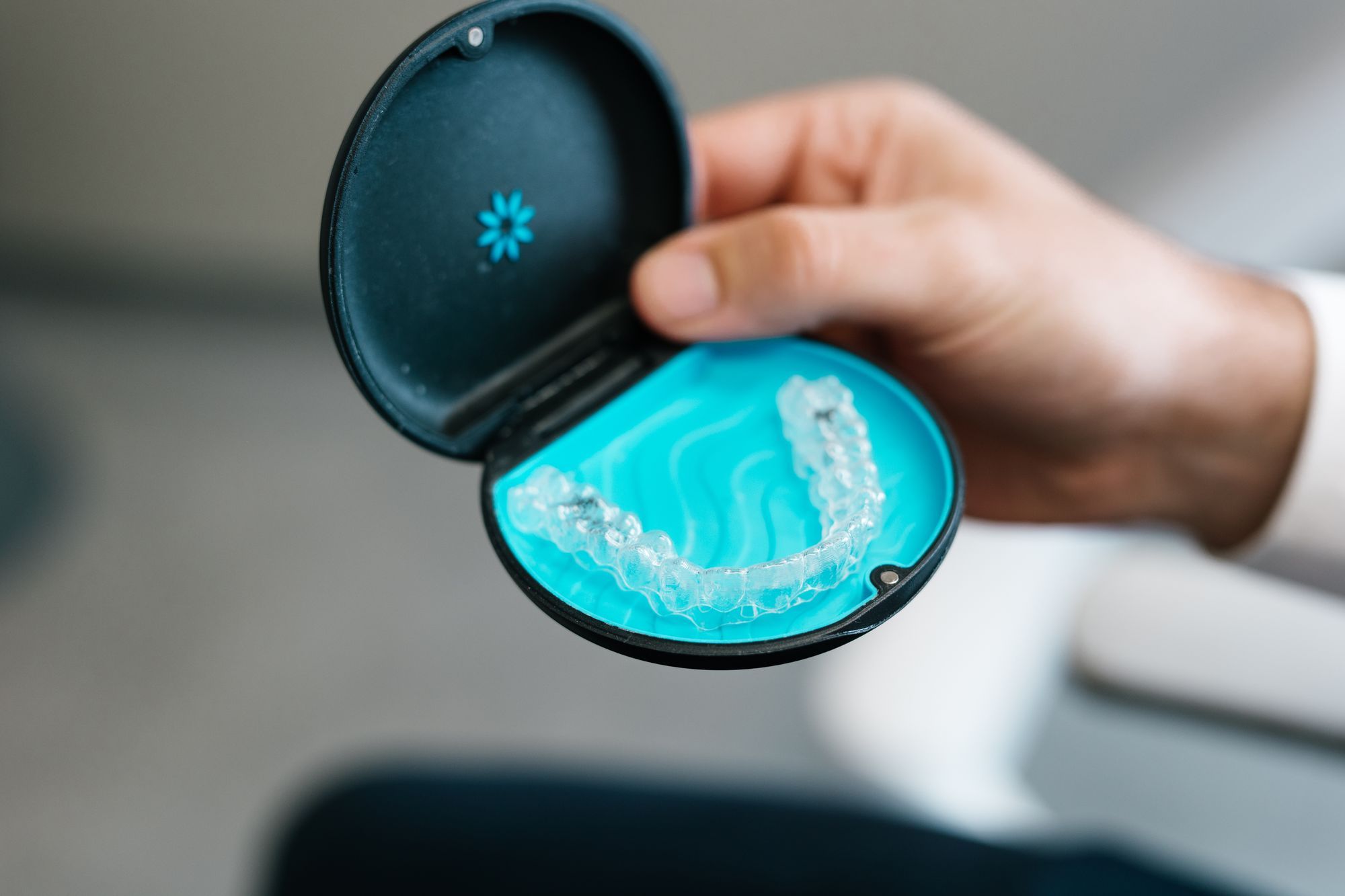
There’s a lovely, low-friction moment where this happens naturally. When someone’s already wearing a custom-fitted aligner every day, whitening the underlying teeth can often be built sensibly into the same course of treatment — the tray’s already there. Patients frequently reach that point on their own:
“Should I, for no extra cost, just get the gels as part of the total Invisalign package?”
A quick, important note on whitening, because there’s a lot of nonsense online. In the UK, tooth whitening is a dentist-led treatment using prescription-strength products, prescribed and supervised after an assessment. It is not the over-the-counter kit or the “whitening bar” on the high street. It’s suitable for many people — but that’s a judgement your dentist makes with you after examining your teeth and gums, not a blanket promise. That’s exactly the conversation B is for.
C — Contour: refine the shape, last
Contouring is the finishing polish — reshaping teeth so they look more balanced and symmetrical. It might mean removing a tiny ledge or bump, or adding a small amount of composite to even up an edge.
The reason it comes last is almost poetic. Once your teeth are straight and bright, your eye starts noticing small asymmetries it simply glided over before. Something I say to every cosmetic patient:
“The mirror starts here at the consultation and ends here at the debond.”
In other words: your relationship with your own smile changes as we go. You’ll start seeing details you were never drawn to at the start — and that’s normal, not a flaw. Contouring at the end lets us respond to what you can now actually see, rather than guessing at the beginning.
Composite bonding vs veneers: where they fit
People often come in with “composite bonding vs veneers” already on their mind, as if the whole makeover is that one decision. It usually isn’t. Both are Contour-stage tools — the finishing stage — and which one suits you depends on how much shaping is genuinely needed once A and B are done.
That’s the quiet argument for doing things in order. When you align and brighten first, the shaping job at the end is small. Small shaping means less bulk. And bulk is exactly what makes cosmetic work start to look fake and heavy. Doing it out of sequence — bonding onto crooked, un-whitened teeth — forces more material, a bulkier result, and often a shorter lifespan. The sequence isn’t a sales structure; it’s simply how good cosmetic dentistry tends to work.
What a makeover actually looks like, start to finish
If you came to see me, here’s the shape of it. We’d talk first — properly — about what you don’t like, not what I’d change. I’d reconfirm any fees before we begin, so there are no surprises. Then, where it’s appropriate, we’d align, review whether you’d like to brighten, and only then consider whether a little contouring would finish things off. You choose how far down the alphabet you want to go: A on its own, A and B, all three — it’s genuinely your call, and every step is optional.
You’d leave the consultation with a clear, written idea of which letters you’re leaning towards and why — not a hard sell, and not a decision you have to make in the chair on the day. Plenty of people take a plan away, live with the idea for a while, and come back to it when they’re ready. That’s completely fine by me.
No result is ever guaranteed — teeth, bites and lifestyles all differ — which is exactly why we plan carefully and in the right order rather than promising an outcome up front. Getting the sequence right is the single biggest thing that separates a smile that looks natural for years from one that looks “done.” That’s really all A, B, C is: a way of making sure we build in the right order, from the foundation up.
Ready to talk it through?
If a smile makeover in London is on your mind, the best first step is a proper cosmetic consultation — no commitment, just a clear, honest plan built around what you actually want.
Book a cosmetic consultation with Kush at Smile Hub to map out your own A, B, C.
FAQs
Do I have to do all three steps of a smile makeover?
No. Align, Brighten and Contour is a menu, not a mandatory package. Some people only align; some align and brighten; some do all three. We plan around what you want to change and what your teeth actually need.
Composite bonding vs veneers — which is better for a smile makeover?
Neither is “better” in the abstract; they’re finishing tools for different situations, and the right choice depends on how much shaping is needed once your teeth are aligned and whitened. That’s what a consultation is for.
Can I just get my teeth whitened without aligning first?
Sometimes, yes — whitening can be a standalone treatment. But if you’re planning any bonding or veneers as well, we whiten the natural tooth first, because cosmetic materials don’t change colour once they’re on.
Is teeth whitening in the UK done at the dentist?
Yes. Professional whitening is a dentist-led treatment using prescription-strength products, prescribed after an assessment. Over-the-counter kits and high-street “whitening bars” are a different thing entirely.
How long does a smile makeover take?
It varies a great deal depending on which steps you choose and where your teeth start. Alignment is the longest phase; whitening and contouring are quicker. We’ll give you a realistic timeline at your consultation rather than a one-size-fits-all answer.